

Professional staging in Australia costs between $3,000 and $20,000. Most of what makes the biggest difference costs nothing at all. This guide tells you exactly what to do, in what order, using advice from the people who do it for a living.
There's a moment every seller has experienced. You walk into a "staged" home for an open inspection and every cushion on the couch has been karate-chopped into a perfect little V. The fruit bowl has three lemons in it and nothing else. There's a candle that's never been lit sitting on a tray that's never been touched.
It looks lovely. It also cost someone thousands of dollars.
Professional staging in Australia typically runs anywhere from $3,000 to $20,000 depending on the property type, and for larger homes, that figure climbs even higher. Across the country, full staging packages can range from a couple of thousand dollars to $20,000 or more, depending on your city and how many rooms need treatment. Sydney sits at the pricier end of that range, simply because everything in this market does.
That's a serious outlay before you've even found a buyer. And here's the thing nobody tells you up front: a lot of what staging does you can do yourself in a weekend, with a few boxes and a bit of patience.
We've pulled together the best advice from professional organisers, stylists and real estate experts, the kind of tips you'd usually only get if you were already paying someone to give them to you. Consider this your free consult.
Before you buy a single throw cushion, deal with what's already in the house. Professional organiser Dana K. White, author of Decluttering at the Speed of Life, has a simple test she uses with clients. She asks whether you've had the chance to use an item in the last six months, pointing out that the question isn't whether you used it, it's whether the opportunity was there and you still didn't reach for it. If the answer is no, that's information.
You can download Dana's Free Five Step guide on her site.
Bridget Flynn, owner of Divine Organizing, takes a similarly methodical approach. She prefers grouping like items together and assessing what actually gets used before streamlining, because she finds it keeps the process efficient and focused. Don't tackle the whole house in one go. Pick a room, sort by category, and make your way through it properly before moving to the next.
This part costs nothing but time. And it's the part that makes the biggest visual difference, because buyers aren't really judging your taste. They're judging whether they can picture their own life in the space, and a packed bookshelf or an overflowing pantry makes that harder than it needs to be.
Buyers open cupboards. Every single one of them, including the hallway linen press you forgot existed. Professional stagers know this, which is why closet capacity is one of the first things addressed in a paid styling consult, with home organiser Britnee Tanner's team typically recommending clients clear out at least 45% of closet space by removing non-seasonal items and keeping only what's needed for the sale period.
You can do this without hiring anyone. Pack away off-season clothes, spare linen and anything you haven't worn this year into a few labelled boxes, and store them out of sight, whether that's a garage shelf, under a bed, or at a relative's place for a few weeks. A wardrobe that closes properly photographs better and feels bigger in person. It's a free renovation, really.
This is the step people find hardest, because it asks you to make your home feel a little less like yours, temporarily. Home designer Michelle Vassey puts it plainly when working with sellers, advising that personal experience needs to come out of the house so you get the best result for the property. It sounds blunt, but it's the job.
In practice, that means swapping family photos for a couple of simple framed prints, taking down kids' theme-room decor, and clearing personal items off bathroom vanities and kitchen benches. You're not erasing your life from the house. You're just giving the next person room to imagine theirs in it.
You don't need to perfect every corner of the house. Decluttering and styling experts consistently point to the same four spaces as the ones that influence a buyer's decision the most. If your time or energy is limited, focus on these 4 rooms
In the kitchen, clear the bench tops completely, even if that means temporarily relocating the toaster and the fruit bowl to a cupboard. Buyers want to picture themselves cooking there and a clean, open counter does more work than any styled vignette.
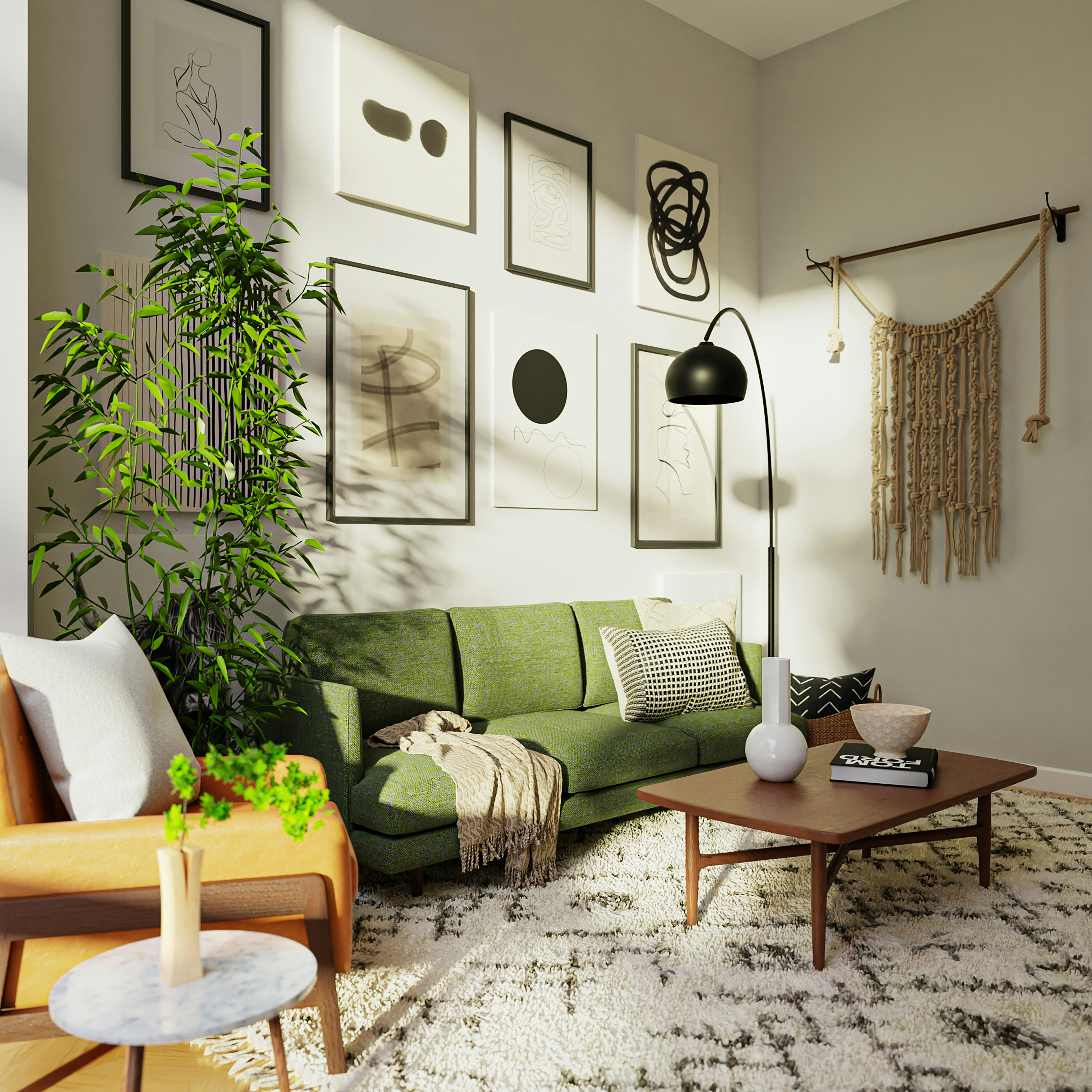
In the living room, the goal is warmth without crowding, a space that looks like it's ready for someone to put their feet up, not a showroom nobody's allowed to touch. Remove personal items and stick to a colour theme.
Buyers stand in the doorway of the main bedroom longer than anywhere else in the house. Strip the bedside tables back to almost nothing, iron the linen, and fold the doona back 30cm so the bed looks like it belongs in a hotel. Clear the floor completely, because floor space is what sells square metres. One colour repeated twice between the cushions and a throw at the foot of the bed is all the styling this room actually needs.
The dining area is where buyers do their most social imagining, picturing dinner parties and Sunday mornings, so the space needs to make that imagining easy. Set the table simply with two to four place settings, nice glasses and a low bunch of flowers. Pull the table away from the wall so it sits in the middle of its space with chairs slightly drawn out, because a table pushed against a wall reads as storage rather than somewhere to gather. A pendant light hung 75 to 90cm above the table surface will do more for how the room feels than almost any other single change you can make.
Sara Chamberlain has styled close to two thousand homes across Melbourne and has been responsible for over $3.3 billion in real estate presentations.
On inspection day, Chamberlain says homes should be flooded with light. Open every blind, turn on every lamp, and use your overhead lights for once. A light-filled room reads as clean and safe to buyers. Anything dim or shadowy makes them wonder what's being hidden. Her advice on furniture scale is counterintuitive for most sellers:
Go bigger, not smaller. A larger rug stretches the perceived size of a room. A generous sofa fills the space the way buyers expect a living area to feel.
She also talks about "repeats" as one of the most powerful tricks in a stylist's toolkit. Using a single colour more than once in a room gives the eye somewhere familiar to land. Timber tones echoed between a coffee table and a picture frame. A warm neutral on a cushion that mirrors the throw on the sofa. These small repetitions are what create a sense of cohesion, and you can do all of it with what you already own.
Steph and Gian, 2023 Block record-holders built their win on Japandi, a style so committed it earned them the nickname "the beige people." Steph's advice to sellers:
Really embody your style. A home with a clear, consistent aesthetic leaves a stronger impression than one that's been stripped back to nothing.
Curb appeal still counts and it's the cheapest fix on this list. Mowing the lawn, trimming overgrown bushes, repainting a tired letterbox and adding a few potted plants near the entry can lift the whole feel of the property for the cost of an afternoon and a trip to the hardware store.
Open all blinds and turn on every lamp, including overhead lights. This is the one time you use them all at once. Light reads as clean and safe.
Skip the $500 candle. Open windows the morning before. A neutral, fresh-air scent outperforms any diffuser in how buyers remember a property.
Pick two tones in the living room and let each appear twice. Timber echoed in a frame, a neutral cushion matched to a throw. That's cohesion without shopping.
Chamberlain's advice: heritage properties respond better to real flowers than to artificial greenery. A single bunch on a kitchen bench does the work of an entire styled vignette.
The data says yes, consistently. Homes that have been professionally staged in Australia have shown an average price premium that runs into the tens of thousands of dollars, with some properties seeing increases well beyond that. Even DIY decluttering and depersonalising, done properly, has been linked to noticeably higher final sale prices in studies of the US market, with sellers seeing a measurable lift simply from presenting a clean, neutral, move-in-ready space.
The honest takeaway is that most of that lift comes from the free part. Decluttering, depersonalising and a thorough clean do the heavy lifting. The styled cushions and the hired armchair add polish on top, but they're not what makes a buyer fall for a home.
Here's the part that might change how you think about timing. You don't need any of this finished before you find out whether there's interest in your home.
Envelope lets you claim your property and start a conversation with serious buyers before you've touched a single cushion. There's no open home to prep for, no professional photography deadline, and no pressure to have the place looking magazine-ready on day one. You tell us your number, we connect you with buyers who are genuinely matched and financially ready, and you decide if and when it's worth moving forward.
If a real conversation turns into a real sale, that's when staging earns its place, polishing a home that's already attracted a serious offer. Until then, you get to skip the part where you're spending thousands of dollars and a weekend of stress on a maybe.
Claim your property on Envelope and see what's possible, before you've vacuumed a single throw rug.
Go bigger, not smaller. A larger rug makes a room look larger. A generous sofa fills the space the way buyers expect a living area to feel.