
Blog post hero image
Property Guides
3 min read

The 5 hidden costs of selling your home

From marketing and styling to cleaning, repairs and open homes, discover the five hidden costs of selling your home and how they can add up before you even make a sale.
Written by
Envelope
Published on
September 10, 2026

Selling your home can be one of the biggest financial transactions you'll ever make.

Most homeowners know they'll probably pay an agent a commission when their property sells. What can be less obvious is how many other costs add up along the way, often before you've received a single offer. From getting your home ready for market to keeping it spotless for weeks of open homes, the traditional sales process can require a significant investment of both money and time.

‍

Here are five costs worth considering before you put up the For Sale sign.

1. Marketing and advertising

Getting your property in front of buyers usually comes with a price tag. A typical campaign can include professional photography, floor plans, copywriting, signboards, brochures, digital advertising and premium listings on the major property portals. These costs can quickly run into thousands of dollars, depending on the property, location and advertising package you choose. And there's an important distinction between marketing costs and an agent's commission: marketing costs are generally incurred whether or not your property ultimately sells.

‍

2. Styling, cleaning and getting your home ready

Selling a home often starts well before the listing goes live. This includes decluttering, window cleaning, gardening and pressure washing. Then there are all the little jobs you've been meaning to get around to: touching up chipped paint, fixing a loose door handle, replacing tired light fittings or finally repairing that dripping tap. Individually, they may not seem significant. Together, the cost of getting a home ready for market can add up quickly.

Then there's professional styling. Furniture, artwork, and accessories can help present your property at its best, but depending on your home's size and how much furniture it needs, professional styling can cost thousands of dollars. If you want to professionally stage your home, you'll probably need to budget an extra $3000 - $20000. All of this happens before you know what buyers are prepared to pay.

‍

3. Keeping your home ready for open homes

Getting your home ready once is one thing. Keeping it that way for several weeks is another.

A traditional campaign can mean regular professional cleaning, gardening, lawn maintenance and last-minute touch-ups to keep the property looking its best for every inspection. Then there's the time involved: tidying before every open home, getting children and pets out of the house, rearranging weekends and having strangers walk through your home. Not every one of these costs comes with a receipt, but they're still part of what homeowners take on when they go to market. And the longer the campaign runs, the more they can add up.

‍

4. The cost if your home doesn't sell

This is the cost sellers can easily underestimate.

You can spend thousands preparing, styling, cleaning and advertising your property and still have no guarantee of a sale. If the campaign doesn't result in an acceptable offer, you've already spent much of that money. And if you decide to try again later, you may need to pay for photography, advertising, styling, cleaning or other preparation costs all over again. That's why it's worth understanding which costs you pay when your home sells, and which costs you're taking on simply to find out whether it will.

‍

5. The footprint a public campaugn leaves behind

Another potential cost that doesn't appear on an invoice.

Once your property has been publicly advertised, its campaign can leave a digital history. Buyers may be able to see how long a property has been advertised, changes in price expectations and whether it has appeared on the market before. If a property sits on the market for an extended period or is withdrawn and later relisted, buyers may start asking why. That doesn't automatically reduce what a home is worth. But it can change the dynamics of the next negotiation, particularly if buyers interpret a long campaign or relisting as a sign that the seller may be more motivated.

‍

Do you have to spend thousands just to find out if someone wants your home?

Not necessarily.

The traditional sales process makes sense when you're ready to commit to selling and want to reach the widest possible market. But what if you're not quite there yet? Perhaps you're curious what your home could sell for. Maybe you'd move if the right buyer came along, but you don't want to spend thousands preparing, styling, cleaning and advertising your property just to find out. That's where pre-market gives you another option.

With Envelope, you can create your home profile for free and quietly see whether there are buyers looking for a home like yours. No upfront marketing campaign. No styling. No weeks of keeping the house inspection-ready. And no open homes just to test buyer interest. And if you're matched with an interested buyer, you decide what happens next.

If you sell through Envelope, you only pay a 0.4% success fee.

If you don't, you haven't spent thousands finding out.

‍

In the living room, the goal is warmth without crowding, a space that looks like it's ready for someone to put their feet up, not a showroom nobody's allowed to touch. Remove personal items and stick to a colour theme.
Buyers stand in the doorway of the main bedroom longer than anywhere else in the house. Strip the bedside tables back to almost nothing, iron the linen, and fold the doona back 30cm so the bed looks like it belongs in a hotel. Clear the floor completely, because floor space is what sells square metres. One colour repeated twice between the cushions and a throw at the foot of the bed is all the styling this room actually needs.
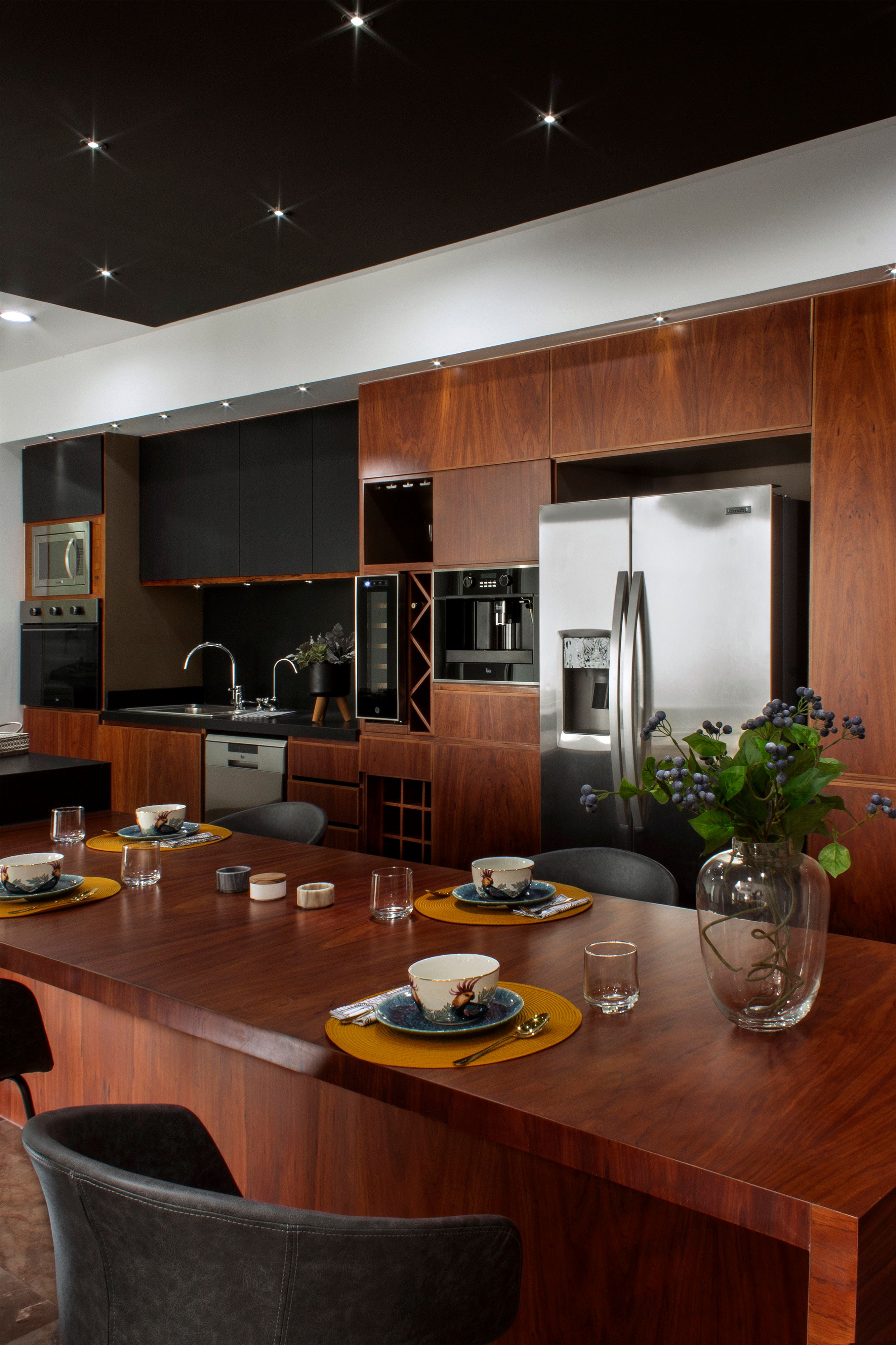
The dining area is where buyers do their most social imagining, picturing dinner parties and Sunday mornings, so the space needs to make that imagining easy. Set the table simply with two to four place settings, nice glasses and a low bunch of flowers. Pull the table away from the wall so it sits in the middle of its space with chairs slightly drawn out, because a table pushed against a wall reads as storage rather than somewhere to gather. A pendant light hung 75 to 90cm above the table surface will do more for how the room feels than almost any other single change you can make.

What Australia's most prolific property stylist says.
‍

Sara Chamberlain has styled close to two thousand homes across Melbourne and has been responsible for over $3.3 billion in real estate presentations. On inspection day, Chamberlain says homes should be flooded with light. Open every blind, turn on every lamp, and use your overhead lights for once. A light-filled room reads as clean and safe to buyers. Anything dim or shadowy makes them wonder what's being hidden. Her advice on furniture scale is counterintuitive for most sellers:
Go bigger, not smaller. A larger rug stretches the perceived size of a room. A generous sofa fills the space the way buyers expect a living area to feel.
‍
She also talks about "repeats" as one of the most powerful tricks in a stylist's toolkit. Using a single colour more than once in a room gives the eye somewhere familiar to land. Timber tones echoed between a coffee table and a picture frame. A warm neutral on a cushion that mirrors the throw on the sofa. These small repetitions are what create a sense of cohesion, and you can do all of it with what you already own.
‍
Steph and Gian, 2023 Block record-holders built their win on Japandi, a style so committed it earned them the nickname "the beige people." Steph's advice to sellers: really embody your style. A home with a clear, consistent aesthetic leaves a stronger impression than one that's been stripped back to nothing.
‍
The Checklist, before potential sellers arrive
‍
Move your lawn
Curb appeal still counts and it's the cheapest fix on this list. Mowing the lawn, trimming overgrown bushes, repainting a tired letterbox and adding a few potted plants near the entry can lift the whole feel of the property for the cost of an afternoon and a trip to the hardware store.
‍
Turn on every light
Open all blinds and turn on every lamp, including overhead lights. This is the one time you use them all at once. Light reads as clean and safe.
‍
Scent scape & keep it fresh
Skip the $500 candle. Open windows the morning before. A neutral, fresh-air scent outperforms any diffuser in how buyers remember a property.
‍
Colour repeats
Pick two tones in the living room and let each appear twice. Timber echoed in a frame, a neutral cushion matched to a throw. That's cohesion without shopping.
‍
Real flowers in older homes
Chamberlain's advice: heritage properties respond better to real flowers than to artificial greenery. A single bunch on a kitchen bench does the work of an entire styled vignette.
‍
Does any of this actually move the price?
‍

The data says yes, consistently. Homes that have been professionally staged in Australia have shown an average price premium that runs into the tens of thousands of dollars, with some properties seeing increases well beyond that. Even DIY decluttering and depersonalising, done properly, has been linked to noticeably higher final sale prices in studies of the US market, with sellers seeing a measurable lift simply from presenting a clean, neutral, move-in-ready space.
The honest takeaway is that most of that lift comes from the free part. Decluttering, depersonalising and a thorough clean do the heavy lifting. The styled cushions and the hired armchair add polish on top, but they're not what makes a buyer fall for a home.
‍
Where Envelope fits into all of this
Here's the part that might change how you think about timing. You don't need any of this finished before you find out whether there's interest in your home.
Envelope lets you claim your property and start a conversation with serious buyers before you've touched a single cushion. There's no open home to prep for, no professional photography deadline, and no pressure to have the place looking magazine-ready on day one. You tell us your number, we connect you with buyers who are genuinely matched and financially ready, and you decide if and when it's worth moving forward.
If a real conversation turns into a real sale, that's when staging earns its place, polishing a home that's already attracted a serious offer. Until then, you get to skip the part where you're spending thousands of dollars and a weekend of stress on a maybe.
‍
Claim your property on Envelope and see what's possible, before you've vacuumed a single throw rug.
‍
Go bigger, not smaller. A larger rug makes a room look larger. A generous sofa fills the space the way buyers expect a living area to feel.